Start here
On this page
Moyamoya is a condition in which the internal carotid arteries narrow progressively where they end inside the skull, along with the large arteries that branch from them. As blood flow falls, a network of small collateral vessels develops at the base of the brain to compensate. These vessels are fragile and often can't supply enough blood1. The name, Japanese for "puff of smoke", describes how the tangle of small vessels looks on an angiogram.
Disease and syndrome
Moyamoya disease is the term used when the characteristic vascular pattern occurs without another explanation. Moyamoya syndrome describes the same pattern alongside another condition, such as Down syndrome, neurofibromatosis type 1 or previous radiation to the head. Diagnostic criteria revised in Japan in 2021 also accept the disease when it affects only one side2.
Symptoms
Moyamoya causes two kinds of event3:
- Ischemic events, from too little blood flow: transient ischemic attacks (mini-strokes) and strokes, causing weakness, numbness, speech or vision problems. These are the usual presentation in children.
- Hemorrhagic events, from bleeding when fragile collateral vessels rupture. About half of people who develop moyamoya as adults have a brain hemorrhage4.
Headache and seizures are also common1. See symptoms and diagnosis.
Sudden weakness, speech difficulty, vision change, loss of balance or a sudden severe headache need emergency care. Call your local emergency number, even if the symptoms pass5.
Diagnosis
Moyamoya is diagnosed by imaging the brain and its arteries. MRI and MR angiography show strokes and narrowing, and catheter angiography (DSA) shows the narrowing and collateral network in detail. Tests of blood flow and of the brain's reserve capacity help decide whether surgery is needed26.
Treatment
Antiplatelet medicines are used for ischemic symptoms. The main treatment is revascularization surgery, which brings a new blood supply to the brain6:
- Direct bypass connects a scalp artery, usually the superficial temporal artery, to an artery on the surface of the brain.
- Indirect revascularization lays tissue with a good blood supply, such as muscle or the scalp artery, on the brain surface so that new vessels grow into it over months.
- Combined procedures use both.
The evidence is strongest for adults who have bled. In the Japan Adult Moyamoya trial, 80 adults with a recent hemorrhage were randomly assigned to bypass surgery or conservative care. Over five years, rebleeding occurred in 11.9% of the surgical group and 31.6% of the conservative group4. In children, a US series of 59 patients treated with an indirect operation found that 45 of 55 with follow-up were living independently more than 20 years later, and only one had a late stroke7. See treatment and bypass surgery.
People without symptoms
Moyamoya is sometimes found by chance. In a Japanese registry of 103 adults with no history of stroke or mini-stroke, the annual risk of stroke over five years was 1.4% per person, and most of these strokes were hemorrhages8. Whether preventive surgery helps people without symptoms hasn't been established.
Children and adults
Moyamoya affects both children and adults, and the evidence for each group is different. See children and adults.
About the editor
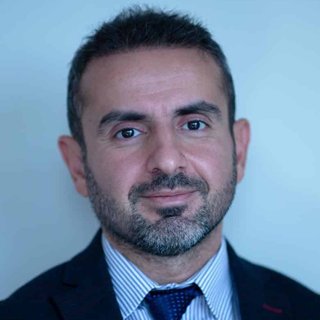
Dr. Kamran Aghayev
Neurosurgeon, Associate Professor of Neurosurgery · Istanbul
Dr. Kamran Aghayev is a neurosurgeon in Istanbul and an associate professor of neurosurgery, with more than 20 years in practice. He trained in neurosurgery at Hacettepe University in Ankara, completed spinal oncology and neuro-oncology fellowships at the H. Lee Moffitt Cancer Center in Tampa, Florida, and taught there as a clinical instructor before returning to Turkey. He chaired the neurosurgery department at Biruni University in Istanbul from 2017 to 2020. His published work includes a surgical technique for jugular vein decompression in atlanto-styloid compression and the PURED operation for thoracic outlet syndrome, and he is a named inventor on 13 U.S. patents for spinal devices.
References
- US National Library of Medicine. MedlinePlus Genetics: Moyamoya disease. Webpage. Source ↩
- Kuroda S et al. Neurologia medico-chirurgica. 2022;62:307–312. doi:10.2176/jns-nmc.2022-0072. Source ↩
- American Heart Association. Top Things to Know: Adult Moyamoya Disease and Syndrome. 23 August 2023. Statement doi:10.1161/STR.0000000000000443. Source ↩
- Miyamoto S et al. Stroke. 2014;45:1415–1421. doi:10.1161/STROKEAHA.113.004386. PubMed ↩
- US Centers for Disease Control and Prevention. Signs and Symptoms of Stroke. 19 May 2026. Source ↩
- Bersano A et al. European Stroke Journal. 2023;8:55–84. doi:10.1177/23969873221144089. Corrected March 2023. Source ↩
- Riordan CP et al. Journal of Neurosurgery: Pediatrics. 2019;23:586–592. doi:10.3171/2019.1.PEDS18457. PubMed ↩
- Kuroda S et al. Stroke. 2023;54:1494–1504. doi:10.1161/STROKEAHA.122.041932. PubMed ↩